CSE 145 and CSE 237D combine the talents of undergraduate and graduate students to develop quarter long projects on a variety of topics in embedded systems. This year saw the development of a number of great projects. Many were proposed by Ryan and members of our research group. A number of them came directly from the students. All of the students put in countless hours to develop these projects, which were highlighted in news releases from the Jacobs School of Engineering and a two part series at Calit2 (Part 1, Part 2). The classes will be offered again in Spring 2015. Start thinking of some good ideas for next year!
Category Archives: Uncategorized
Hardware Security Technology Highlighted in Various News Outlets
 The hardware security techniques developed in our research group, and being commercialized by Tortuga Logic, recently received a significant amount of news coverage. This all started with a story from the Jacobs School of Engineering that got picked up by a number of different venues including ACM TechNews, Calit2, R&D Magazine, Science Codex, Counsel and Heal, Phys.org, Science Daily, RF Globalnet, Product Design and Development, Red Orbit, and probably several others that I have missed. The International Business Times also interviewed Ryan and put out a rather lengthy story.
Three papers accepted to FPL 2014
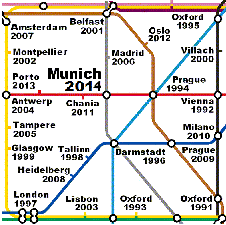 Our group continues its success at FPL following up last years three papers and best paper award with three papers in this upcoming FPL to be held in Munich, Germany in September. Pingfan was the lead author on the paper “Hardware Accelerated Novel Optical De Novo Assembly for Large-Scale Genomes” which develops a hardware accelerated solution for genome matching. This paper was done in collaboration with our friends at BioNano Genomics. The second accepted paper was “Improving FPGA Accelerated Tracking with Multiple Online Trained Classifiers” with Matt as the lead author. This paper utilizes the performance of FPGAs to create a robust tracker by training the features in an online manner. Dajung was the lead author on the final paper, “High Throughput Channel Tracking for JTRS Wireless Channel Emulation”, which developed a channel tracker which is an integral part of the wireless channel emulator project with Toyon Research Group. Congrats and beifall to all the authors!
Two more add “Dr” to their names
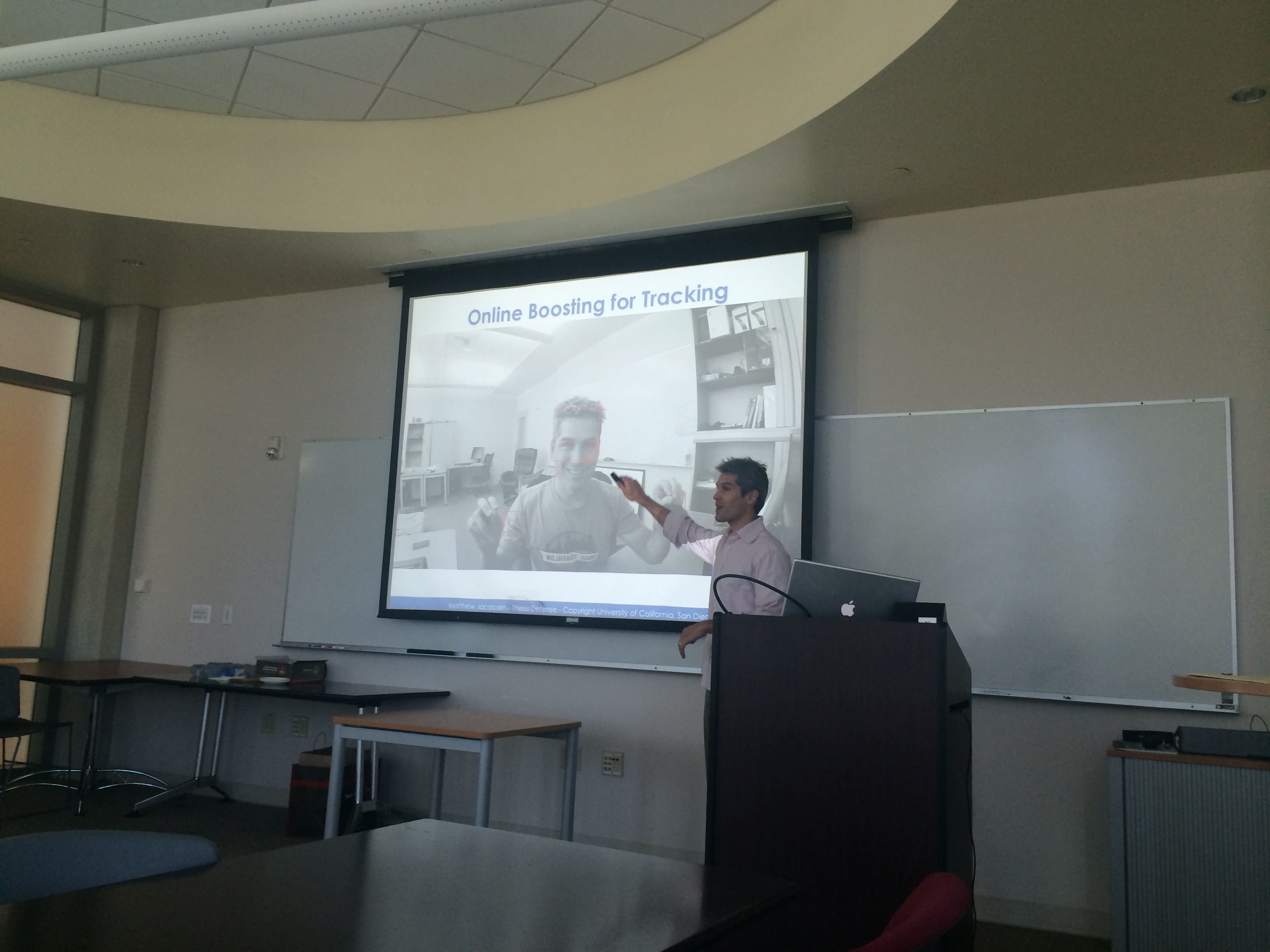
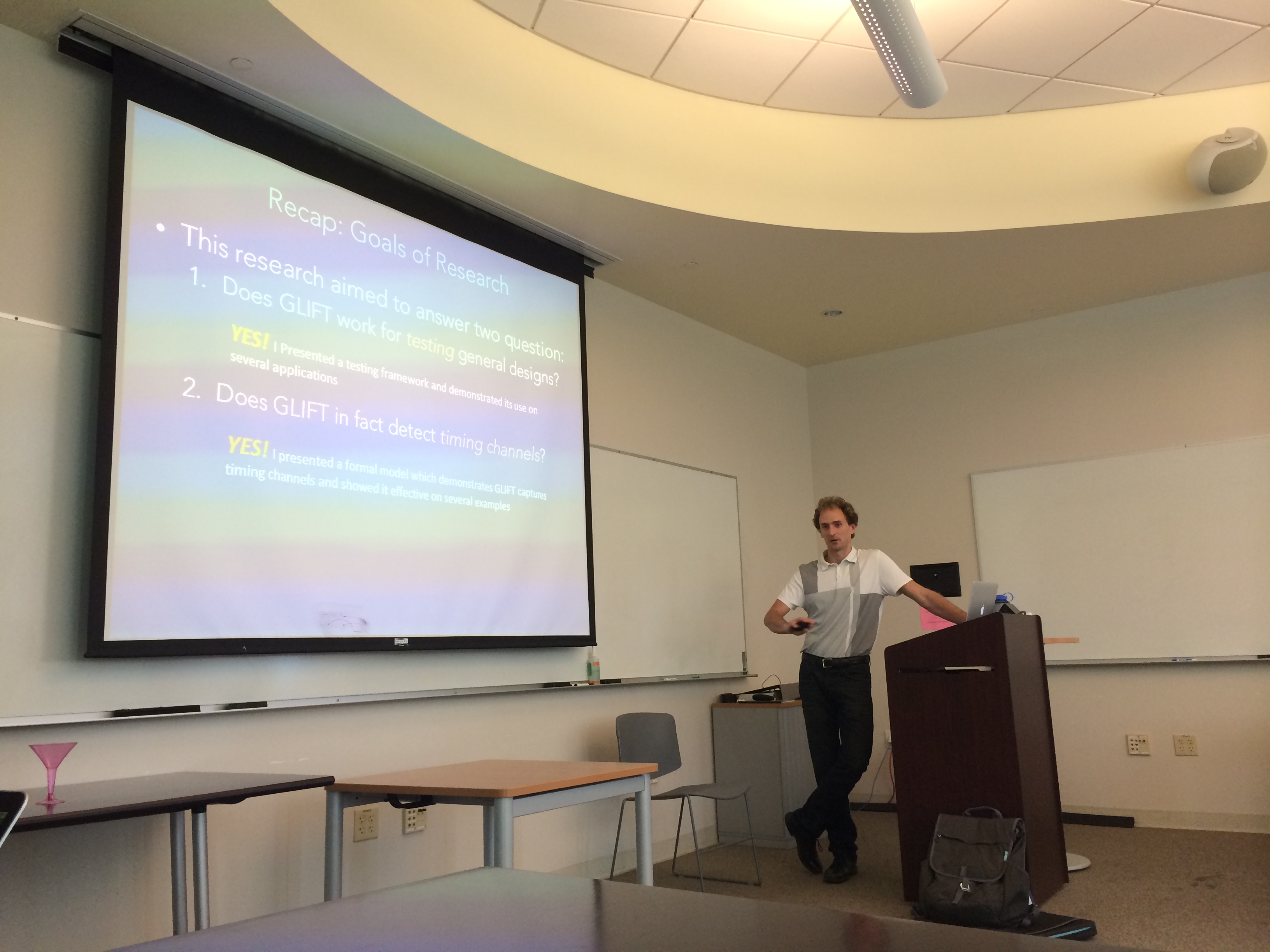 Matt and Jason successfully defended their theses bringing the total to three people who have graduated with PhDs from the Kastner Group this year. Matt’s research focused on developing a Smart Frame Grabber framework to ease the development of building computer vision applications using heterogeneous systems. Jason’s research on hardware security developed the first method for determining the existence of timing channels in hardware.
Both will be missed, but will not be going too far. Matt will work at Google in Irvine though will still reside in the San Diego area. Jason will be full-time CEO at Tortuga Logic. Congrats to both!
First Technique for Detecting Hardware Timing Channels
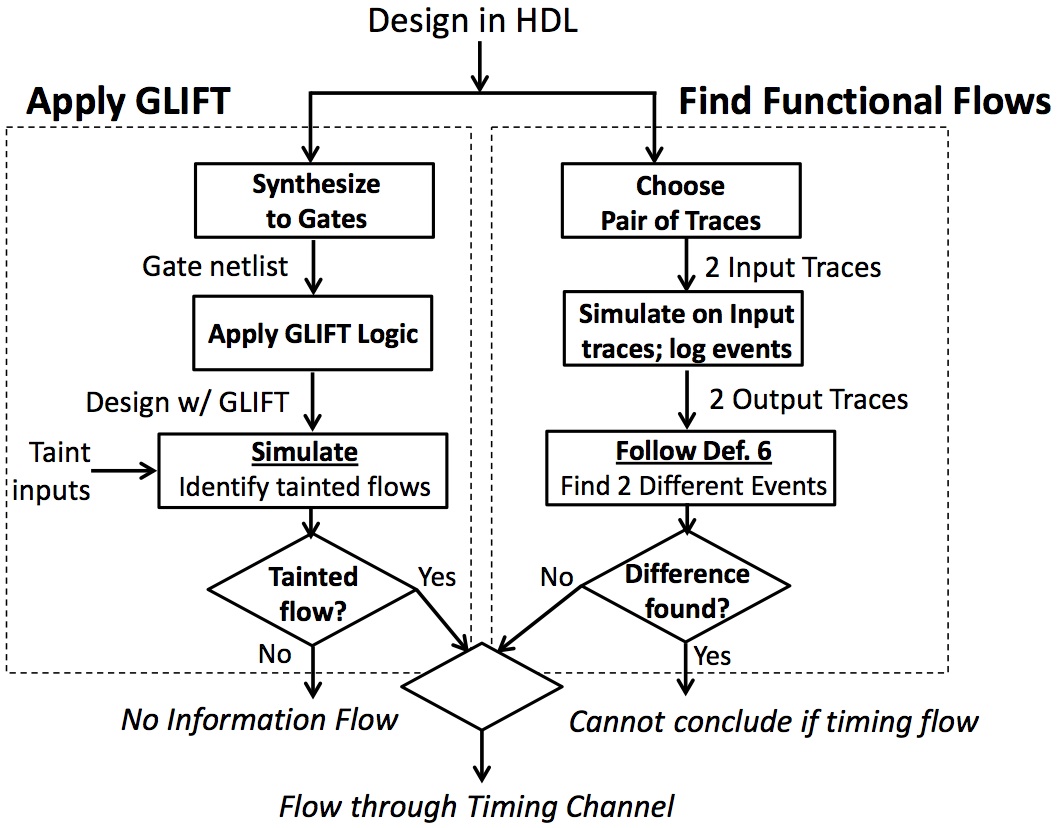 The article “Leveraging Gate Level Properties to Identify Hardware Timing Channels” was accepted to the IEEE Transactions on Computer-aided Design of Integrated Circuits and Systems (TCAD). Jason was the lead author along with co-authors Sarah Meiklejohn (UCSD), Timothy Sherwood (UCSB), and Ryan. This paper formalizes how Gate Level Information Flow Tracking can be used to detect timing channels: a form of information leak where secret information can affect run time.
Dr. Chris Barngrover Defends His PhD Thesis
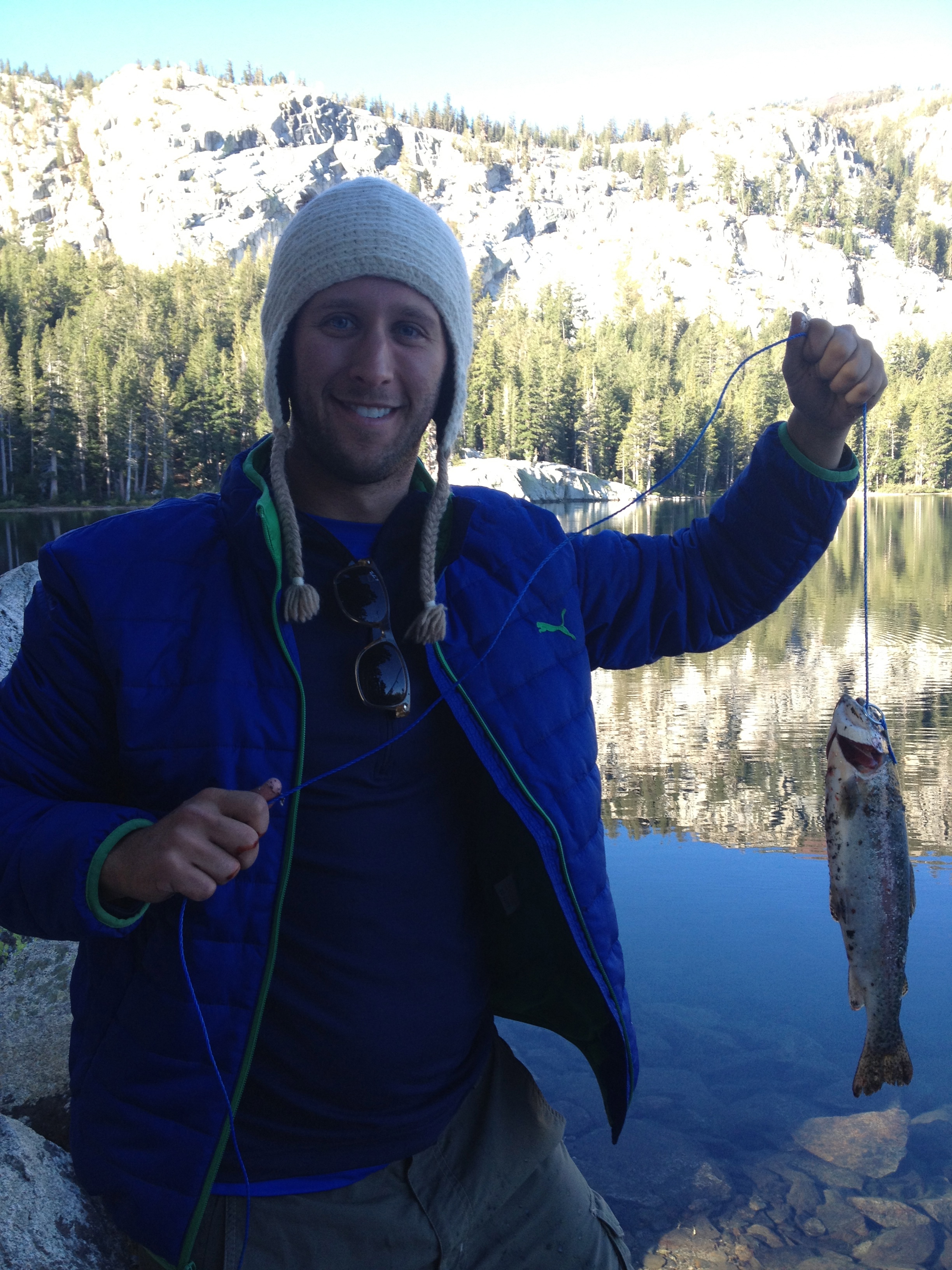 Congratulations to Dr. Barngrover on successfully defending his thesis titled “Automated Detection of Mine-Like Objects in Side Scan Sonar Imagery”. His PhD research focused detecting underwater mines using side scan sonar on autonomous underwater vehicles. He developed a number of computer vision techniques that can accurate detect these mines. Additionally, he developed the first method of using a brain-computer interface system to quickly identify the mines. During his time in the Kastner Group, he also became a skilled fisherman as evidenced by the nice rainbow trout that he caught during one of our group retreats in Mammoth. Dr. Barngrover will continue to work at SPAWAR after graduation.
Team FANGS Wins Honorable Mention at Cornell Cup
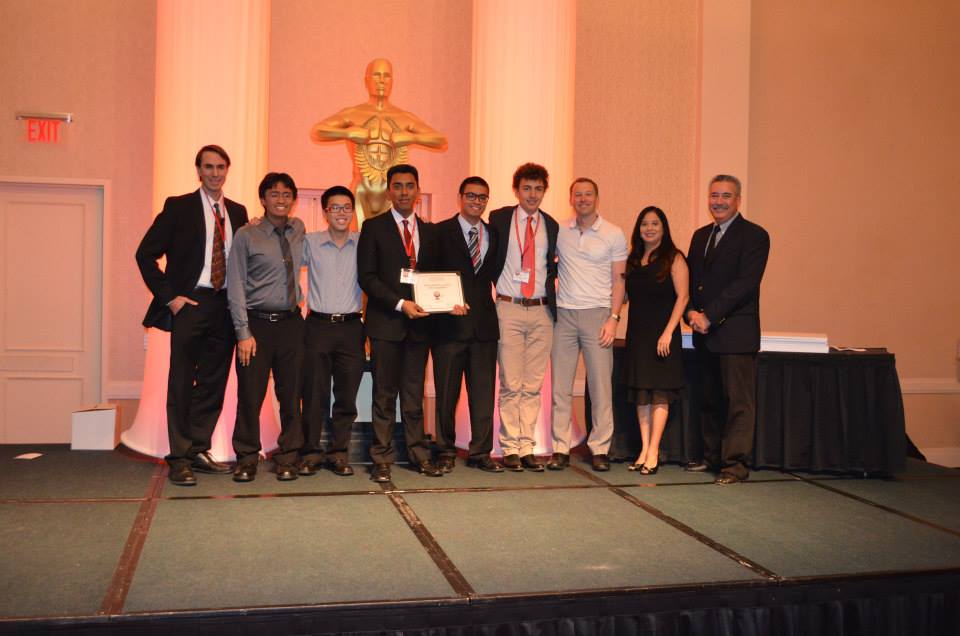 Team FANGS took home an honorable mention at the Cornell Cup. The team consisted of Engineers for Exploration members Xavier Tejeda, Dominique Meyer, Andrew Elgar, Kevin Cheng, and Jorge Pacheco. The team was advised by Ryan. These undergraduate students spent the past several months developing a terrestrial vehicle that is capable of remotely monitoring wolves at the California Wolf Center. They competed with over 30 teams in Orlando, FL on May 2-3.
Marshall College Highlights Ryan’s Mentorship of Transfer Students
 Ryan was highlighted for his work in the Marshall Mentor Program. This is a year long program that pairs first year transfer students with a faculty mentor. Thurgood Marshall College is one of the six colleges at UCSD. This unique system allows students to select a focus on their general elective classes.
California Dreamin’
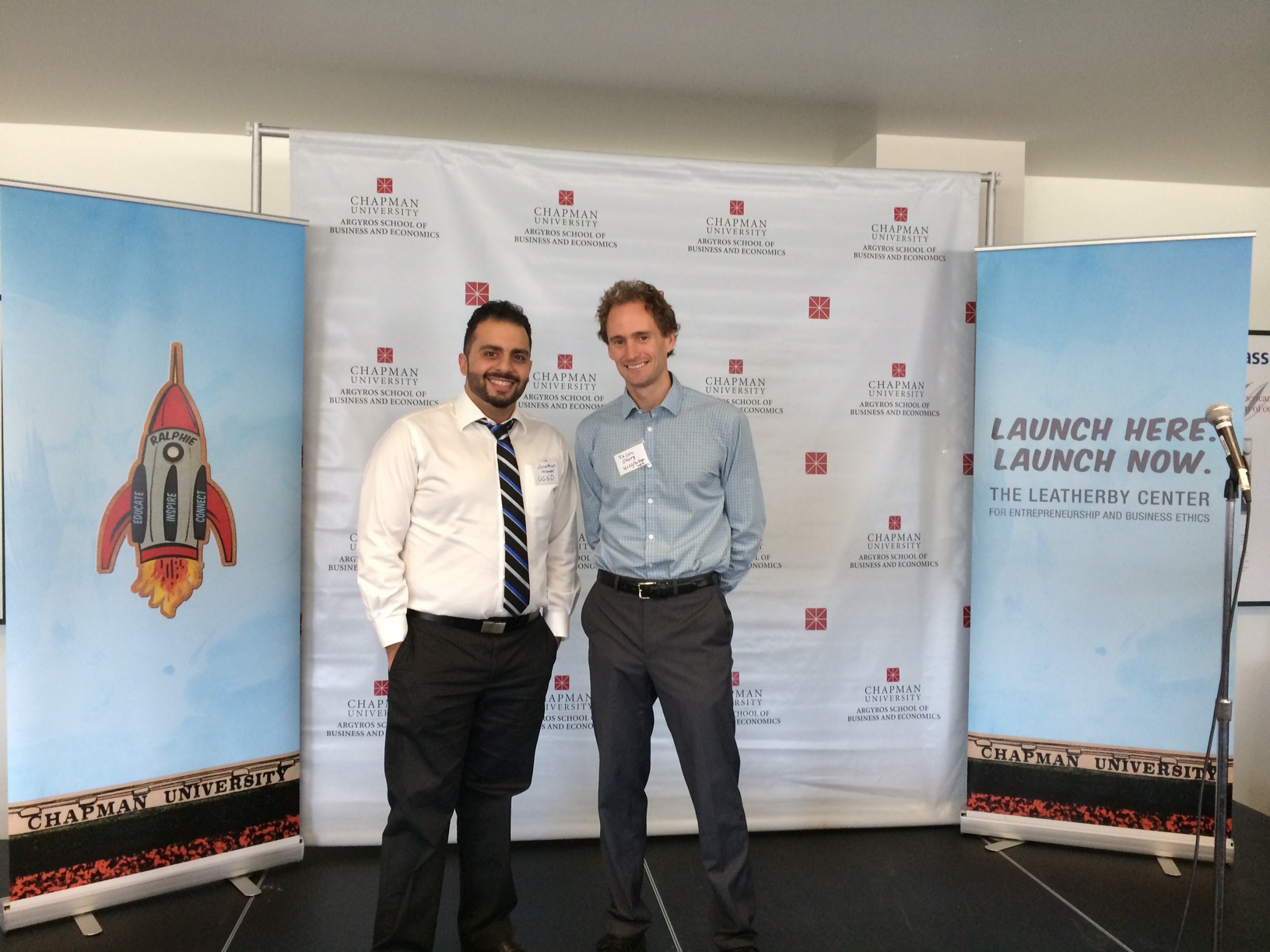 Jason and Jonny were invited to represent Tortuga Logic and compete in the California Dreamin’ Entrepreneurship Competition held by Chapman University on April 25-26. The competition, which included the top start-up from 30 schools, focused on connecting founders to investors and business mentors. Jason and Jonny were finalists in the Case Competition portion of the event and left with a $2,000 prize.
Low Power Data Compression Research Accepted to ASAP Conference
 Our research to develop a low energy system for canonical Huffman encoding was accepted to the IEEE International Conference on Application-specific Systems, Architectures, and Processors (ASAP). The paper was the result of work done last summer during Janarbek‘s internship at Microsoft Research. It is a collaborative work with Joo-Young Kim at MSR.